

Soffit lighting: how it works and what it looks like
The short answer
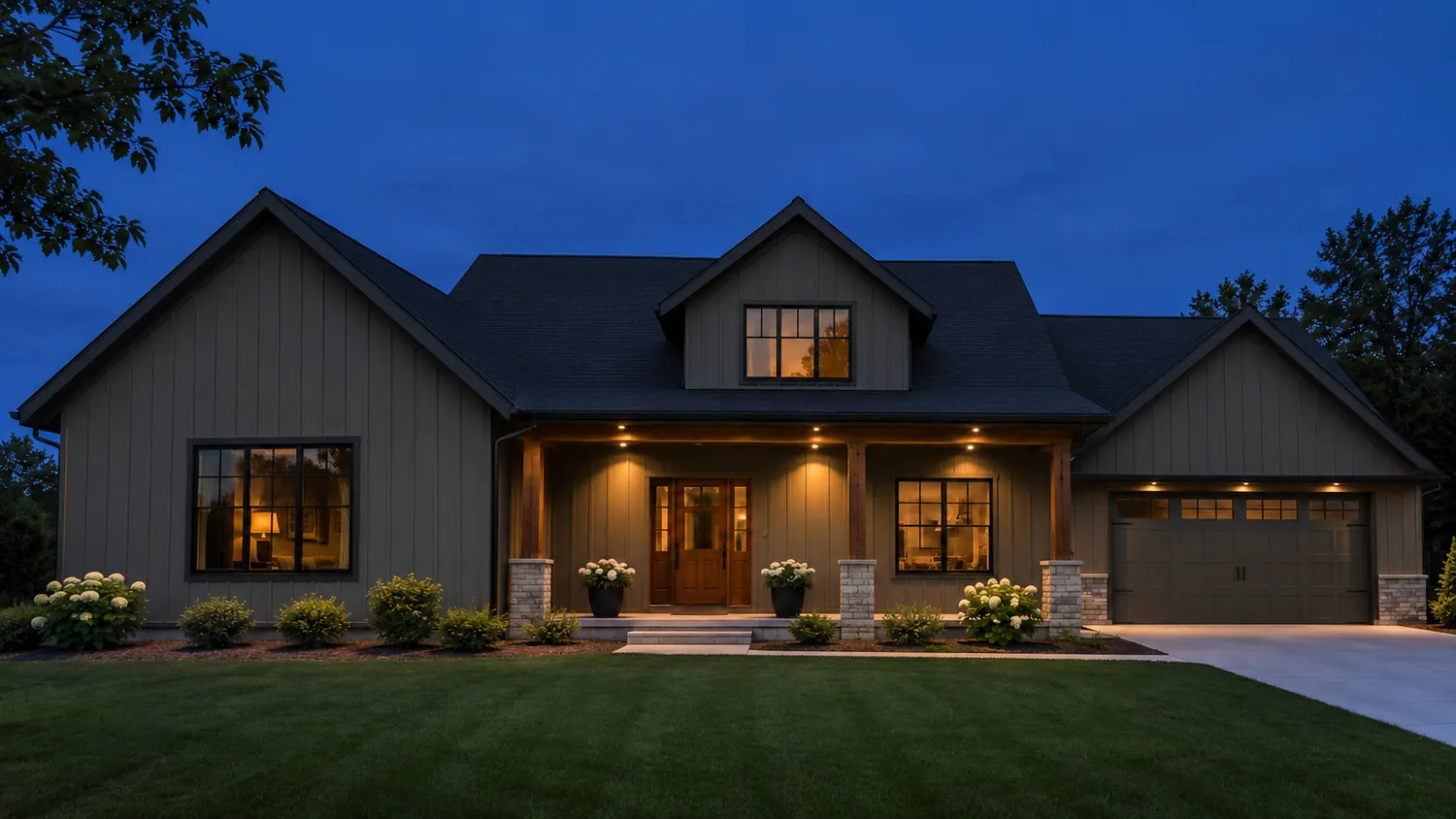
Soffit lighting is any light mounted on the underside of your eaves, shining down the wall. There are two common ways to do it: recessed lights set into the soffit, which are usually one fixed white, or small permanent lights in a slim track, which change to any color from your phone. We install the track kind, in the closest color we have to your trim.
What is soffit lighting?
The soffit is the flat underside of your roof’s overhang, the part you see when you stand under the eave and look up. Soffit lighting, also called under-soffit, under-eave or eave lighting, is mounted there and shines down the wall. Today, nearly all of it is LED.
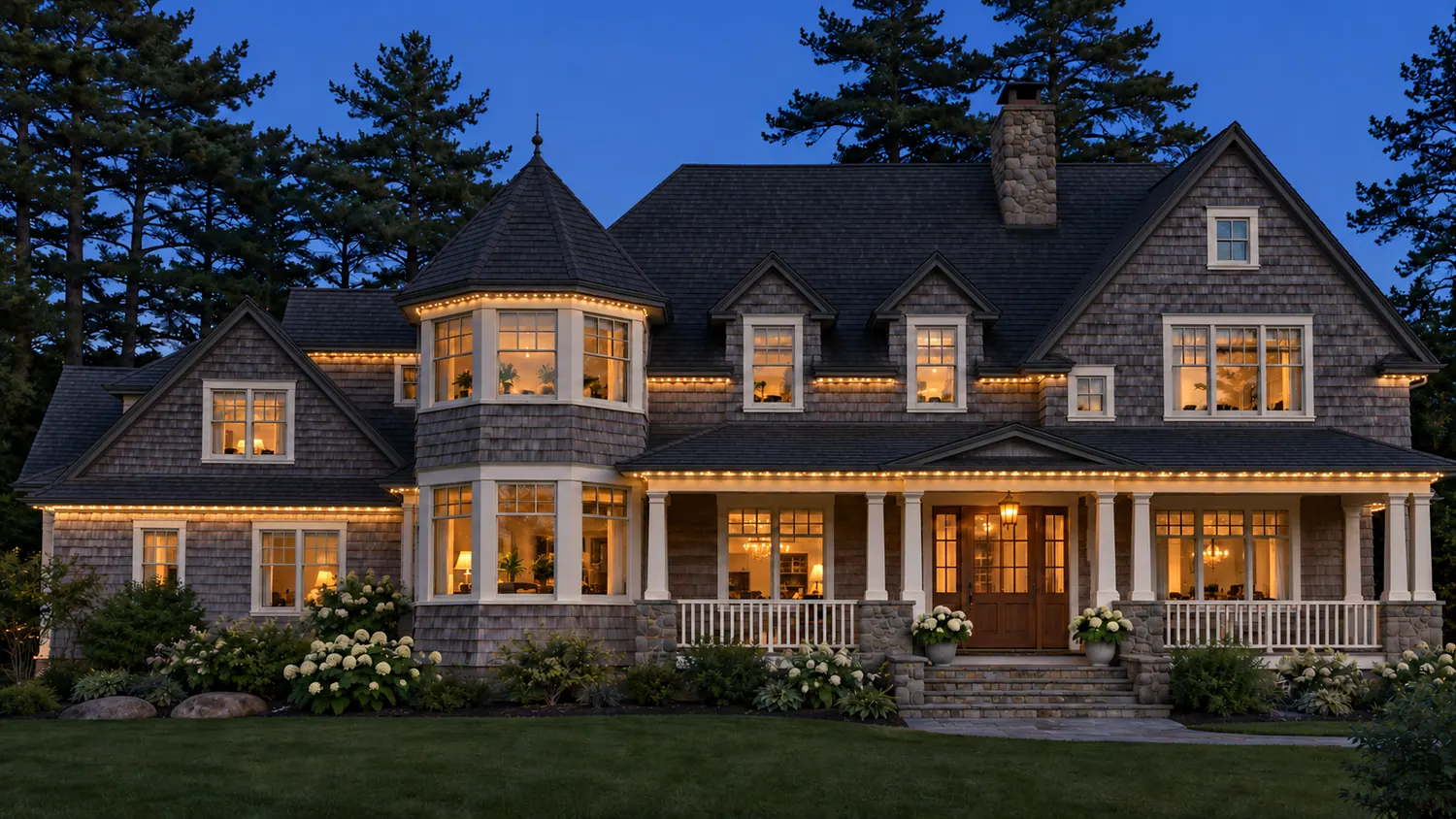
What you get is a lit wall, with the shape of the eave drawn along the top of it. It’s a different look from a line of lights along the edge of the roof, and on many houses it’s a quieter one.
Recessed soffit lights or LED lights in a track?
Most of what you’ll find under “soffit lights” is one of these two.
| Compare | Recessed soffit lights | Surface-mounted LED lights in a track |
|---|---|---|
| How they go in | Openings cut into the soffit, with wiring run to each light | A slim track fastened along the underside of the soffit or gutter |
| Who usually installs them | An electrician | A permanent lighting installer |
| The look at night | Separate pools of light, usually a few feet apart | Small lights close together, in a repeating scallop along the wall |
| Color | Usually one white, though some bulbs change color | Any color from your phone, and warm white whenever you want it |
| By day | A small round trim in the soffit | A slim track, in the closest color we have to your trim |
| Best if | You want plain white light and nothing more | You want warm white most nights and color when there’s something to celebrate |
You’ll also see recessed lights called soffit can lights, pot lights or downlights. We install the kind in a track. If what you want is recessed lights, an electrician is the person to call, and we’ll tell you so.
Pointing down or pointing out
The same small lights look very different depending on which way they face, so we choose it with you.
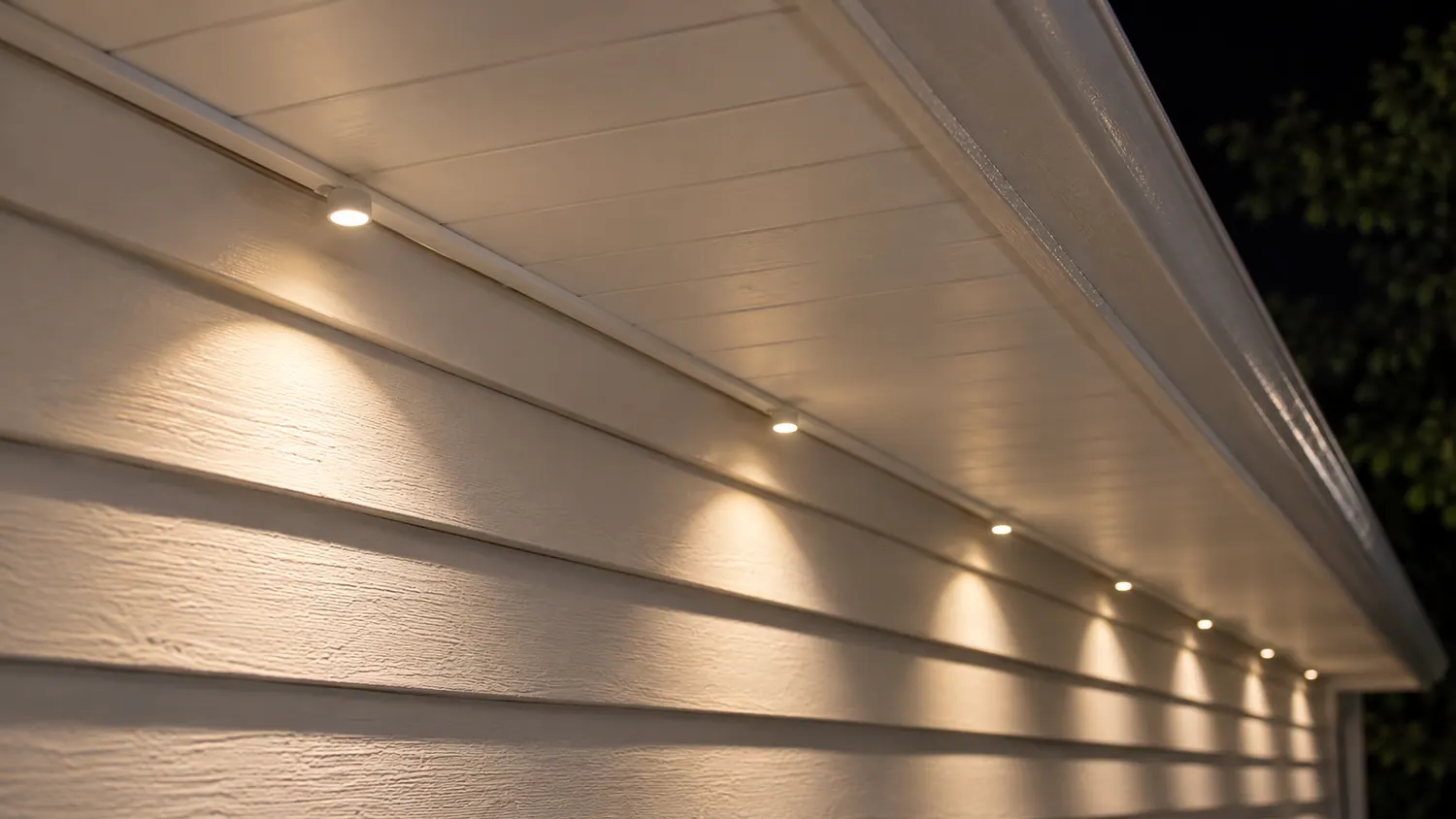
- Pointing down. They sit under the soffit, or on the underside of the gutter. You still see the dots, and each one throws a scalloped pool of light down the top of the wall.
- Pointing out. They sit on the fascia or drip edge, or on a bracket under the gutter. At night you see a crisp row of separate dots tracing your roofline.
Pointing down lights the house. Pointing out draws its outline. Pale walls show the scallop best, and a dark wall will show less of it. Here’s more on track and mounting.
Which lights work under a soffit?
- Dots do their best work pointing down. They’re round, about the size of a large coin, with a lens made to throw light down a wall.
- Pebbles are small capsule lights in a slim track, and they can point down or out.
- A fascia that drops below the soffit calls for a deeper track, which holds Pebbles behind it. That’s one of our mounting options.
Where should soffit lights go?
Placement comes down to how close the lights sit to the wall, how far apart they are, and what they land on.
- Close to the wall shows texture. The nearer a light sits to the wall, the more it grazes clapboard, shingles or stone. Farther out, the light falls softer and flatter.
- Even spacing makes the pattern. Evenly spaced lights read as one line of arcs, and uneven ones read as a mistake. With lights in a track, spacing depends on the look you want and the lights you choose, and tighter spacing is available.
- Think about the windows. With recessed lights, each pool of light is a separate decision, so line them up with the walls between your windows. Small lights close together in a track make this matter less.
- Carry it to the corners. A run that stops short of the corner makes the house look unfinished from the street.
How is soffit lighting installed?
Recessed lights need an opening cut for each one and wiring run to it, so that’s usually an electrician’s job. Lights in a track are surface-mounted: the track fastens along the underside of the soffit or gutter and the lights sit in it, with low-voltage power and a small controller to run them. Here’s how the whole installation goes.
Soffit lighting ideas
- Warm white all the way around. Quiet, and it lights the whole house.
- Just the front. Most people see your house from one side, so it’s a good place to start.
- Over the entry or the porch. A small run where you come and go.
- Front and side eaves together. Run the lights under every level eave you see from the street, so the whole house reads as one lit wall.
- Garage soffit lights. Bright white over the doors when you want to see the driveway.
- Color on the dates that matter. The same lights can go red and green in December, or orange and purple for Halloween. Here are more ideas.
What you’ll see by day
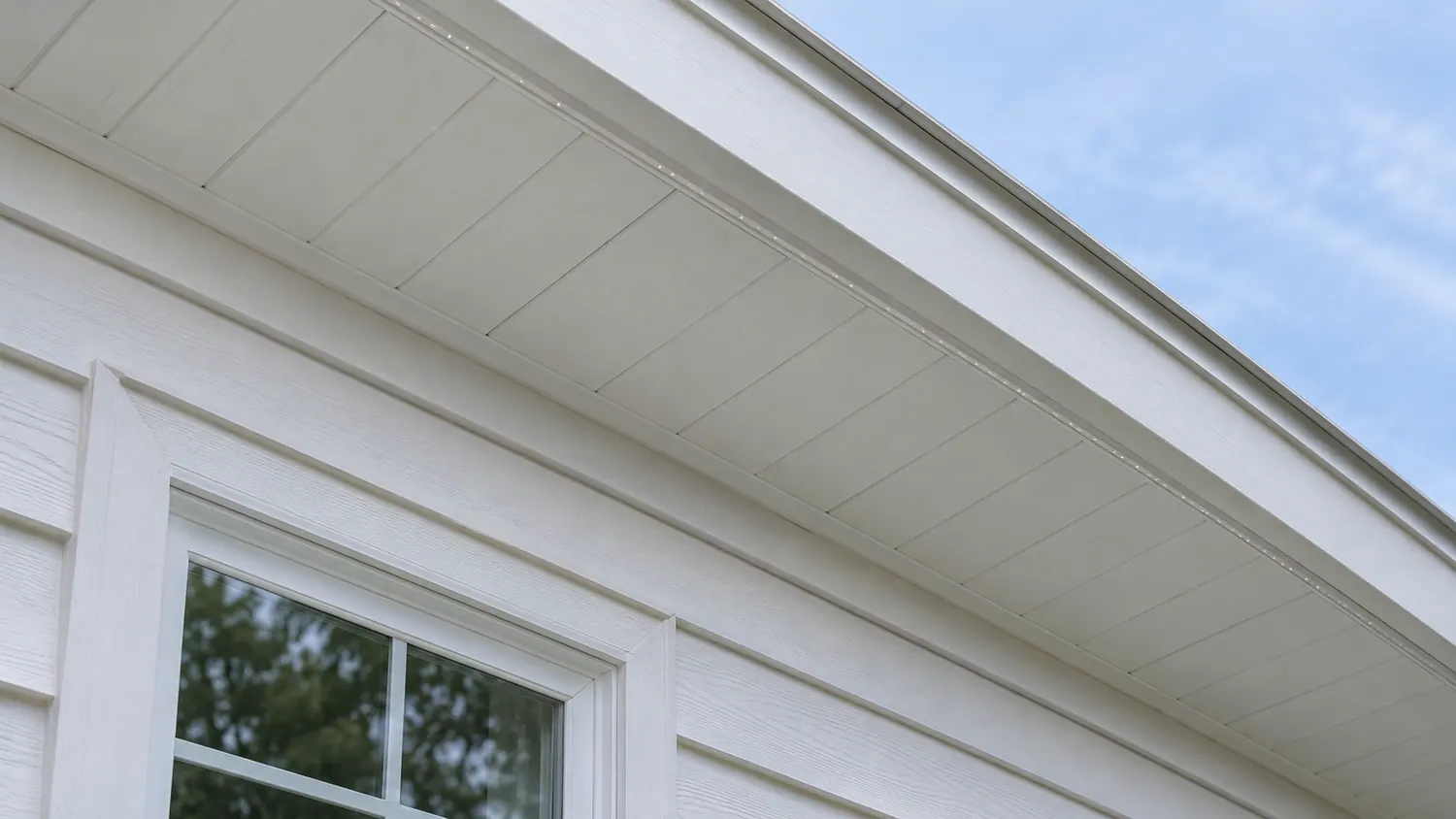
A slim track and very small lights. We design each installation to blend with your home’s architecture as closely as we can, and most people will likely prefer a track that’s color-matched to the fascia, soffit or trim.
Which houses suit it?
- Houses with a real overhang. A deep eave gives the lights somewhere to sit and the wall a clean line to start from.
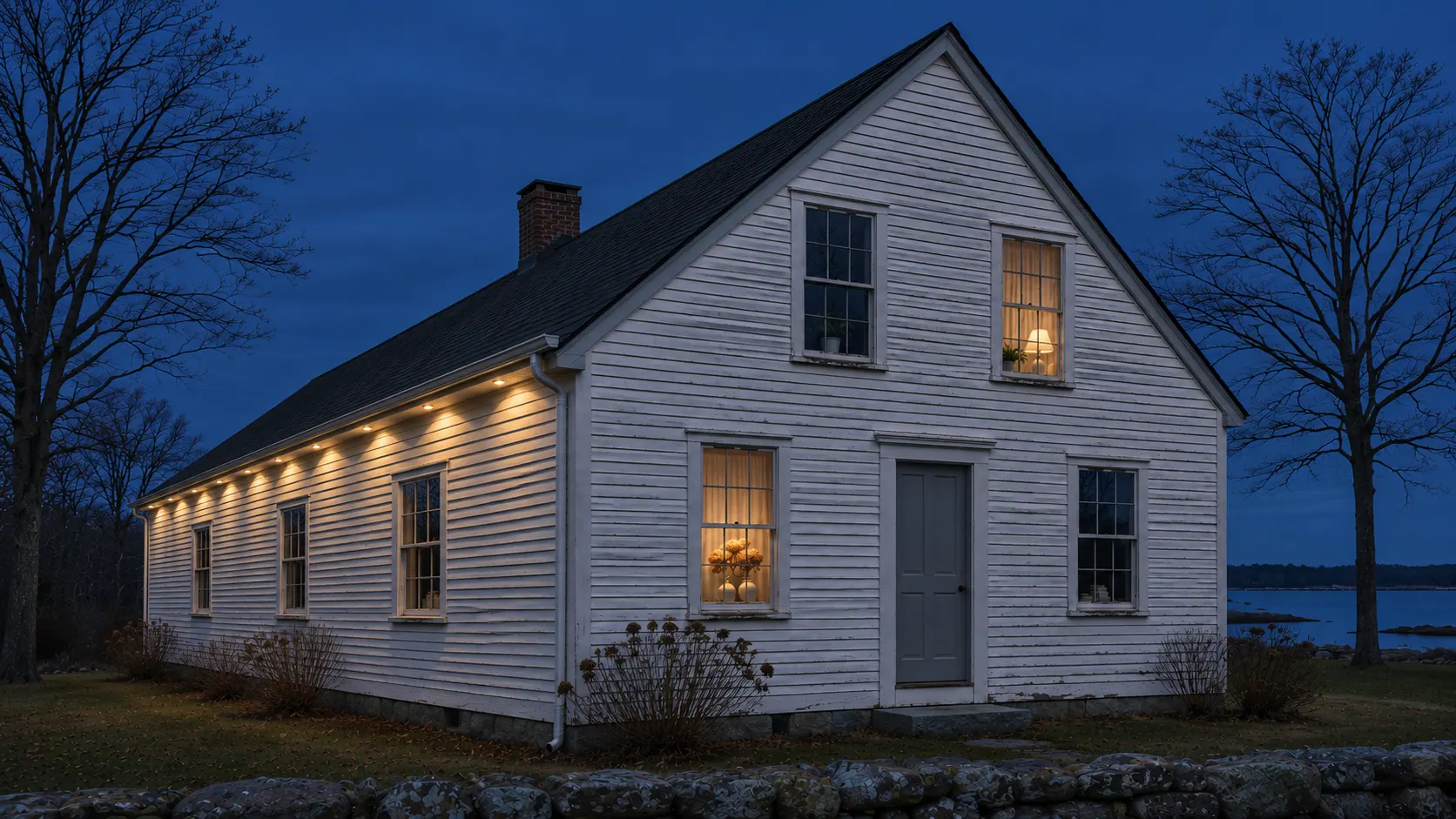
- Colonials, capes and farmhouses with long, straight eaves. The repeating scallop reads best where it has room to run.
- Porches and garage wings. These can be part of the same design.
- Houses with little or no overhang. Pointing out on the fascia may suit these better. We’ll tell you which one we’d do.
Many soffits are vented, and they’re built differently from one house to the next. Whoever you hire, ask what the track fastens to and how it works around your vents. We’re part of a roofing company, and we’ll show you what would go where before we start.
Common questions
Can soffit lights change color?
Ours are color-changing soffit lights. You pick any color from your phone, or tap warm white and leave it there. Many recessed lights are one fixed white, so check before you buy.
Do you cut into my soffit?
We don’t cut openings for the lights the way recessed lights need. The track fastens along the underside, and we’ll show you what would go where before we start.
How much does soffit lighting cost?
It depends on your house, so we don’t publish a single price. Every installation is custom-designed and priced to your property. Here’s what affects the cost.
Can I install soffit lights myself?
Kits have come a long way, and if you enjoy a weekend project one might suit you. Here’s what a kit asks of you.
Can you do this on my house?
We’re based in Exeter, NH, and we work across the NH Seacoast and Southern Maine. Send us your details, and a photo of your house if you have one.
Who wrote this The team at Modern Lighting Expressions in Exeter, NH, a lighting division of Steve’s Modern Roofing. Stephen Payne runs the company, and working roofers do the installs.
The pictures on this page are concept visualizations of how the lights can look. They aren’t photos of actual installs.
Keep reading
 Permanent roofline lighting: what it is and how it looksWhat it is, where it mounts, and how it looks by day and by night.
 What affects the cost of permanent Christmas lights?The seven things that change a quote, and what a good quote should tell you.
 12 questions to ask a permanent lighting installerWho does the work, how it fastens, what’s covered, and who you call later.
Get a free quote for your house
Send us your details, and a photo of your house if you have one. We’ll come back with a free quote.