

Warm white or cool white for your outdoor lights?
The short answer
For most houses, warm white is the better choice outside. It looks like lamplight, it flatters brick, wood and cream paint, and research suggests it draws fewer insects than cool white. Cool white is crisper and bluer, and it’s useful when you want to see the yard or you have a very modern house. With color-changing lights you don’t have to pick one for good, because you can switch from your phone.
What the words mean
White light comes in different color temperatures, measured in kelvin. The lower the number, the warmer the light looks.
| Name | What it looks like |
|---|---|
| Warm white | Lamplight, a little golden |
| Neutral white | Plain white, like an office |
| Cool white | Daylight, a little blue |
Makers label these differently, so go by how the light looks at night on a real house, not by the name on the box.
How each one looks on a house
| Your house | Warm white | Cool white |
|---|---|---|
| White or cream clapboard | Soft and welcoming | Crisp, and it can look stark |
| Red brick | Brings out the warm tones | Can make the brick look gray |
| Cedar shingles and natural wood | Makes the wood glow | Can wash the color out |
| Dark paint or a modern house | Quiet and elegant | Sharp and clean |
| Fieldstone | Warm and old-fashioned | Picks out the texture |
Most New England houses are wood, brick or stone, which is why most of them look best in warm white.
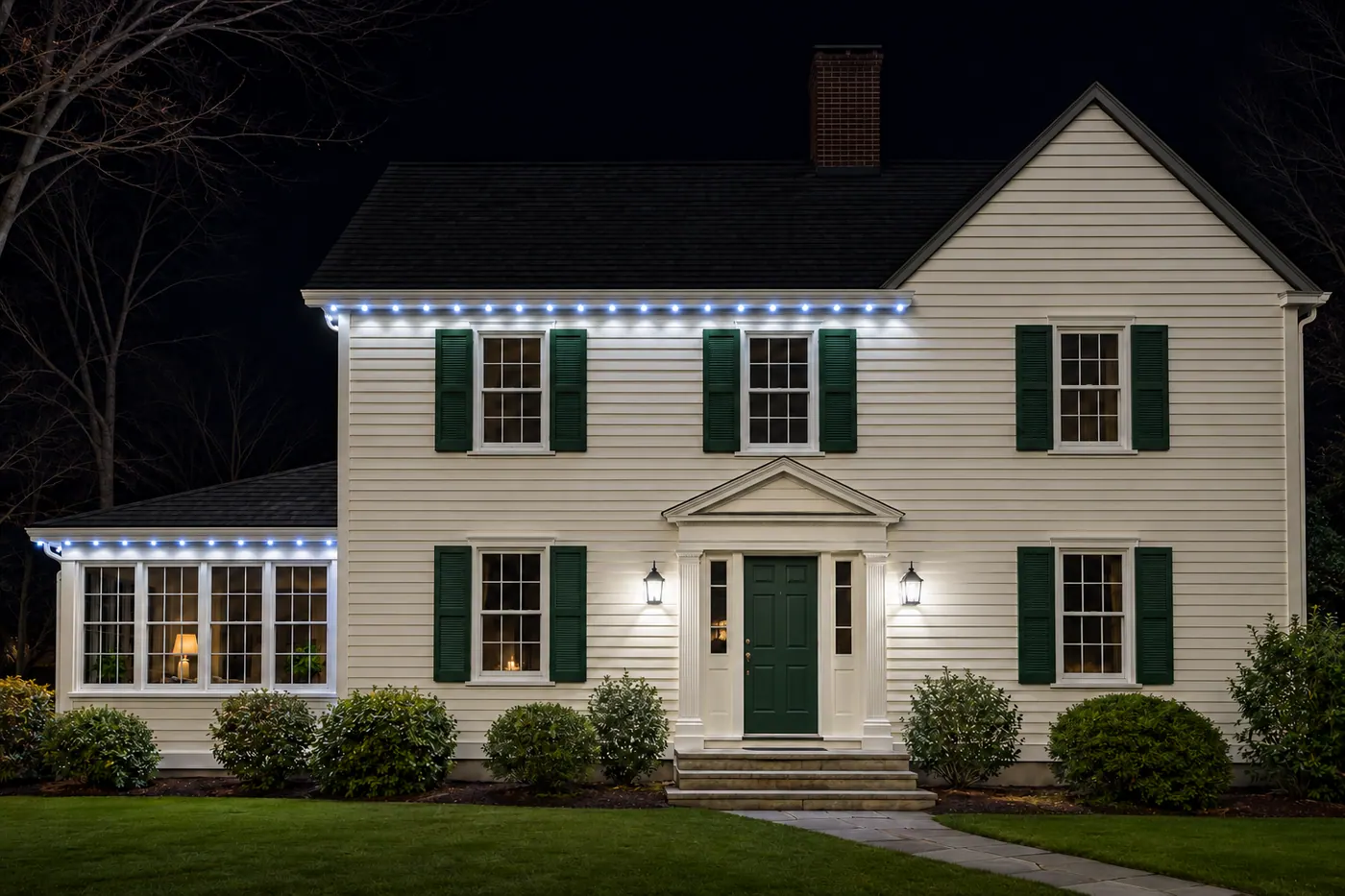
Which one for an ordinary night?
Warm white, for most people. It’s the light your house already has in its windows, so the roofline looks like it belongs there. It’s also easier on the neighbors than a bright, bluish white.
Cool white earns its place when you want to see. It’s good for the front of the garage, the driveway, or a walk in from the car after dark. Here are more everyday ideas.
Do warm white lights attract fewer bugs?
They seem to. Many night-flying insects see blue and ultraviolet light especially well, and cool white light has more blue in it. In a comparison of household bulbs presented in 2016, a warm LED caught the fewest insects, fewer than a cool LED or a “bug” light.
Color temperature isn’t the whole story. A 2015 study of LED lamps found that not all lamps of the same color temperature attract insects equally. Brightness and how long the lights stay on matter too.
Fewer isn’t none. On a summer night any outdoor light will draw some moths. Warm white, a lower brightness and a schedule that turns the lights off at bedtime are the easy things you can do about it.
Why some warm whites look wrong
Many color-changing lights make white by mixing red, green and blue, and it can come out a little pink or a little green. Our flagship RGBW+2 Pebble has a true warm white in every light, alongside the red, green and blue, so its warm white isn’t mixed from the other colors.
If you’re comparing lights, ask to see the warm white at night, not just the colors.
What about Christmas?
Warm white with red and green is the classic look, and it’s the closest to the old bulbs most of us grew up with. Cool white with blue gives you something icier. With permanent lights you can run one on Christmas Eve and the other on New Year’s. Here are more holiday ideas.
Common questions
What color temperature is best for outdoor lights?
For most homes, warm white, the golden end of the scale. Makers number and name these differently, so ask to see it at night.
Is cool white brighter than warm white?
It often looks brighter, even at the same output, because it’s closer to daylight. That’s why it works well when you want to see the yard.
Can permanent lights do both?
Ours can. You can move between warm white and cool white from your phone, or pick any color.
Can I see the colors before I decide?
Yes. Try the remote to see warm white, cool white and every color on a house, then ask for a free quote. We work across the NH Seacoast and Southern Maine.
Who wrote this The team at Modern Lighting Expressions in Exeter, NH, a lighting division of Steve’s Modern Roofing. Stephen Payne runs the company, and working roofers do the installs.
The pictures on this page are concept visualizations of how the lights can look. They aren’t photos of actual installs.
Keep reading
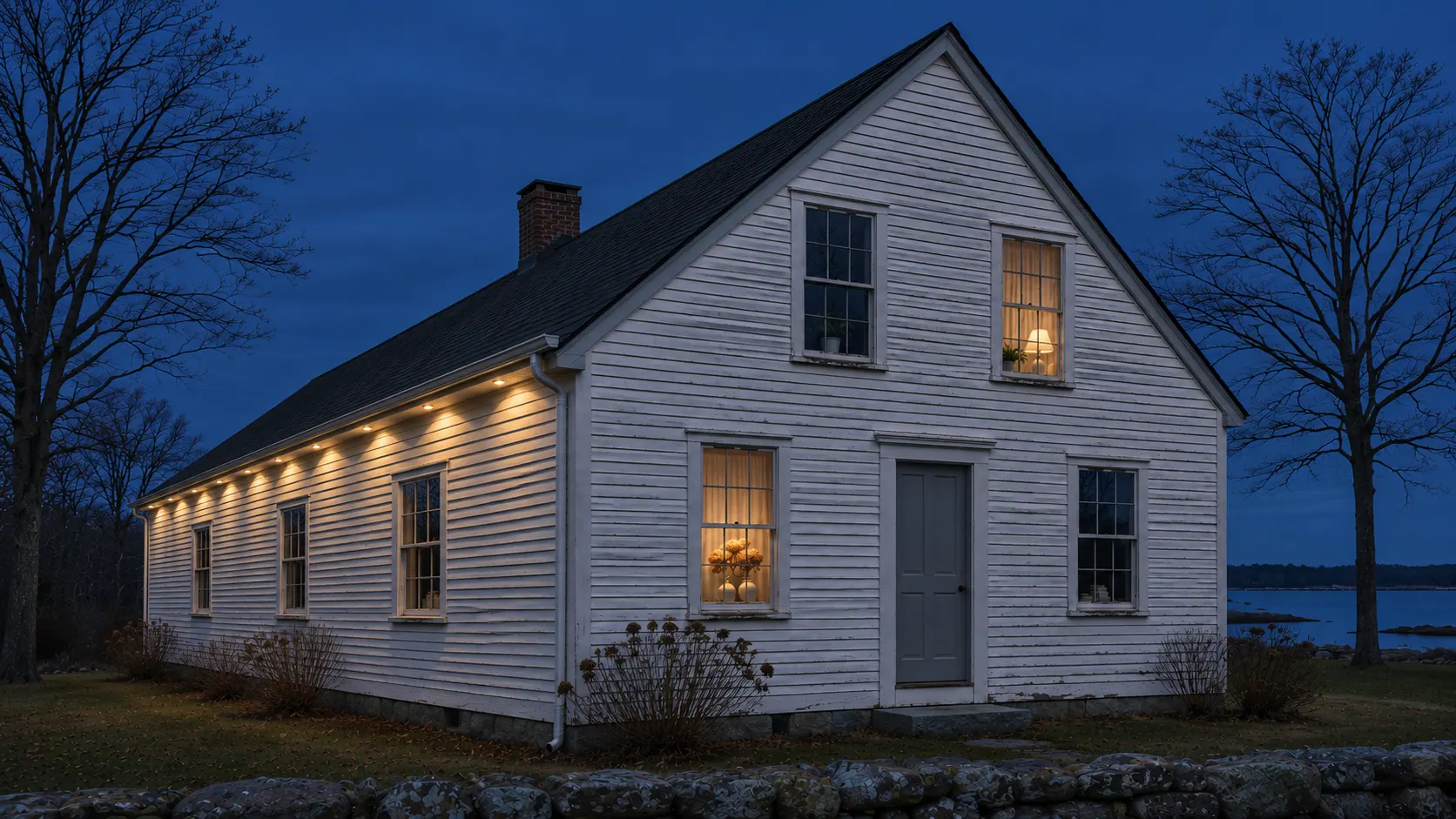 Permanent roofline lighting: what it is and how it looksWhat it is, where it mounts, and how it looks by day and by night.
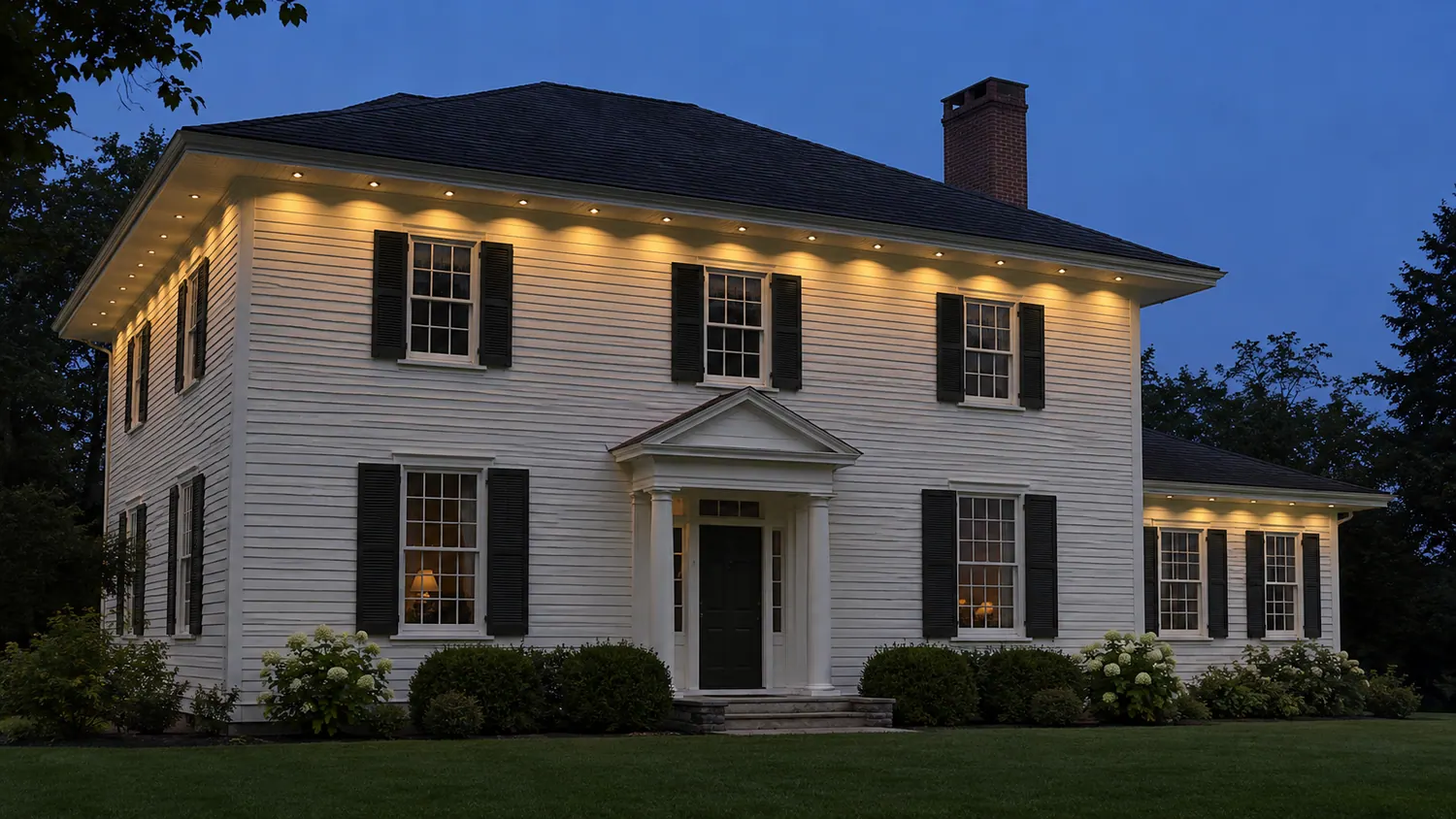 Soffit lighting: how it works and what it looks likeRecessed or in a track, pointing down or out, and what you’ll see by day.
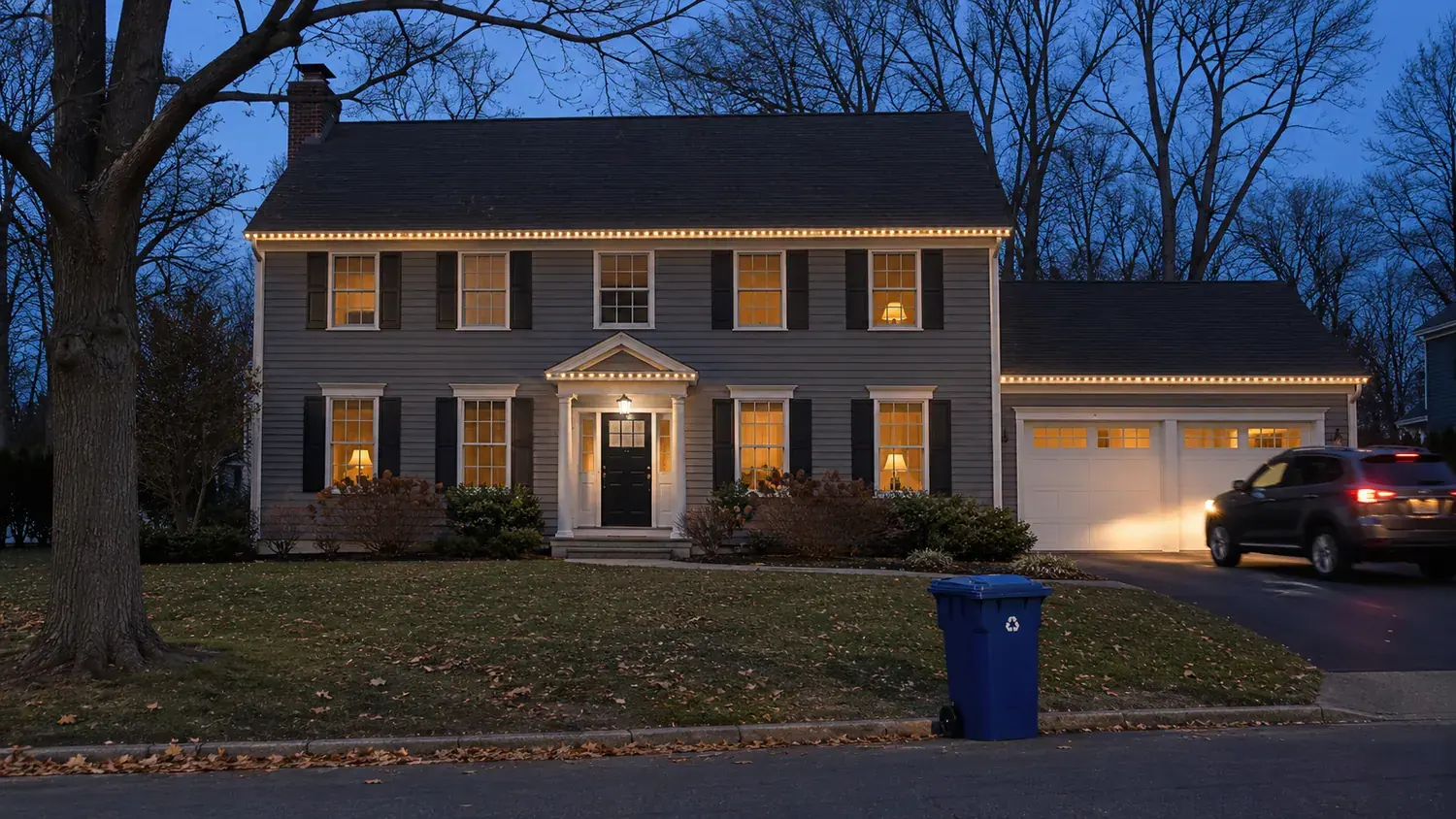 Are permanent Christmas lights worth it?Who they suit, who should skip them, and a simple way to decide.
Get a free quote for your house
Send us your details, and a photo of your house if you have one. We’ll come back with a free quote.